BUILT TO LAST

The Hammer
2086 Narrative
By the mid-twenty-first century, architecture has become driven by short-term development cycles and planned obsolescence. Buildings are designed around replacement and demolition rather than longevity. Repair and maintenance of exisiting buildings has become economically unviable, and entire communities across the UK are displaced into new-build developments to avoid rising costs.
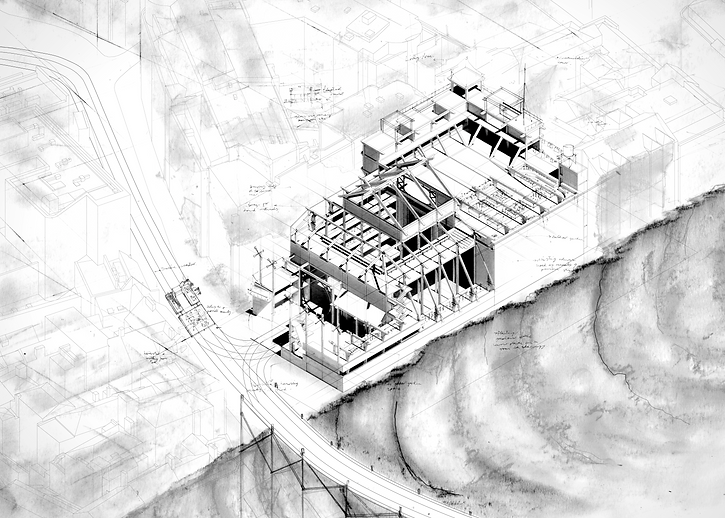
Historical cities like Nottingham begin to fill with abandoned and severely degraded buildings. In 2086 a group begins to reinhabit these structures, adapting and repurposing the existing materials to build new, long-lasting communities around the city. They base themselves in an abandoned car park, reconfiguring the structural components to form an adaptable living space and central repurposing facility.
Spatial Concept
Built to Last is a speculative adaptive reuse project, exploring how architecture can support long-term use in response to rising short-term design cycles in the modern built environment.
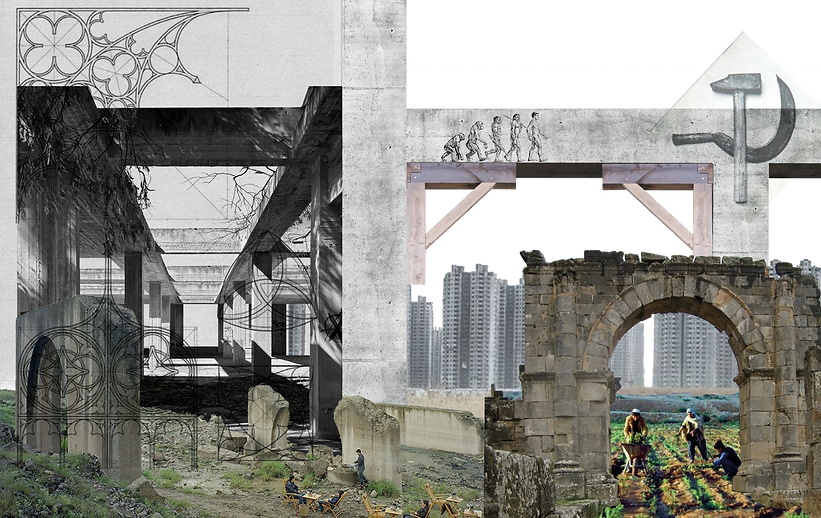
It focuses on adaptation, building upon existing layers, and design for disassembly, taking inspiration from traditional architectural practices that have stood the test of time.
The design utilises a strong structural frame system that encourages addition and adaptation. Fully demountable, it is inspired by the modularity of the hammer, a repurposing tool with a design proven from ancient times to present day. This allows for future reconfiguration of the site and creates a circular design. All materials in the project are salvaged from the site itself or from existing structures around Nottingham.